Ski Everyday In Komoro
Live in Komoro from November to May. Mt. Asama in your backyard. Six ski resorts inside 45 minutes. Lift tickets under $40. The ZuCity Daily Access Pass provides intel, chill space, coworking, cars, and gear that gives you a winter on the snow.
Every option on one map
Thirteen ski resorts within driving distance of ZuCity Komoro, drawn to scale. Hover or tap any marker for actual drive time. Green = local circuit (≤45 min). Purple = weekend trips (≤90 min). Orange = the famous ones we go to for weekend trips. Click any resort on the left to see lift prices, season, and our take.
Legend
What you don't get from a guidebook
We live here. We've spent multiple winters figuring out which lifts have the shortest lines on Saturday mornings, which lodge has the best curry, which onsen is empty after 8pm, which back roads cut 20 minutes off the drive to Sugadaira when there's traffic on the expressway. None of it is on TripAdvisor. None of it ever will be . You only learn it by living here to see it firsthand.
Spots we only share with people who stay
Small resorts on the Saku-Tomi side that don't have English websites — by design, we suspect. Locals-only ramen near the trailheads. Snow-covered shrines you find by accident on a wrong turn. Hot springs that are technically private but the owner is friendly to community members. Stay a winter and we'll show you. Stay two and you'll be the one showing the next person.
The community part
ZuCity has shared cars with snow tires (we're not amateurs), shared boards and skis for guests to borrow before they buy their own, a group chat where people can organize trips, and a coliving neighborhood as our base. Most weekends there's a group going somewhere — meet at the kotatsu, decide where the snow's best, pile into the car, go.
The local circuit
We're not a skii resort. We're a community that loves daily adventures, finding places unknown, going down backcountry trails and finding out where the bottom is when we get there. Then we go home to sleep in our beds and do it again the next day. Six resorts within 45 minutes of our coliving houses in Komoro. Lift tickets under $40, families who've been coming to the same hill for thirty years, lift attendants who know your name. You can rotate through these on weekday mornings before work. Here are our favorite local spots:
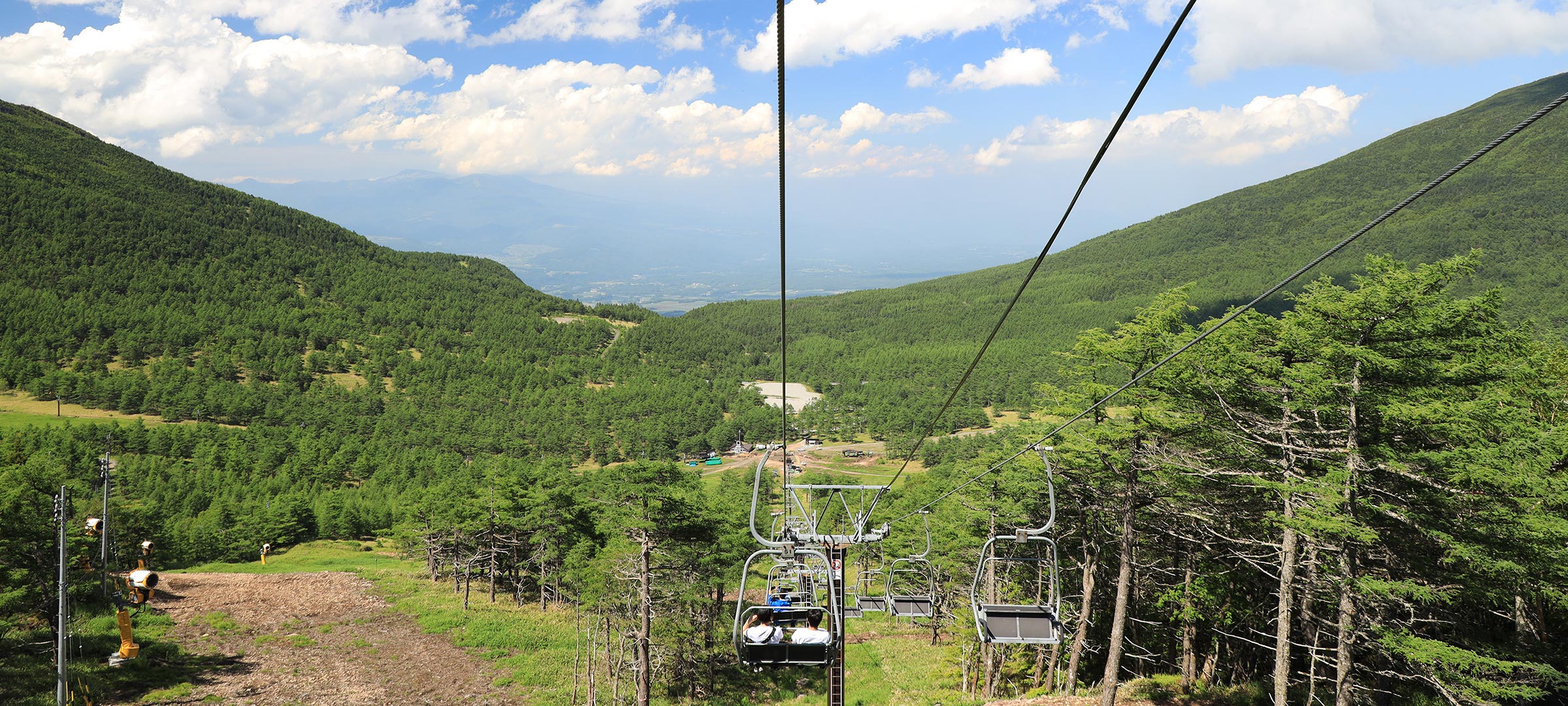
Asama 2000 Park · 31 min
Our home mountain. On the south flank of Mt. Asama — an active volcano — base 1,880m, peak 2,050m. High enough to hold snow when lower resorts are raining. Six lifts, longest run 2.9km. ¥5,400 day pass — under $40, less than a single day's rental at Hakuba. The lift attendants know us. We come here on weekday mornings before work because we can.
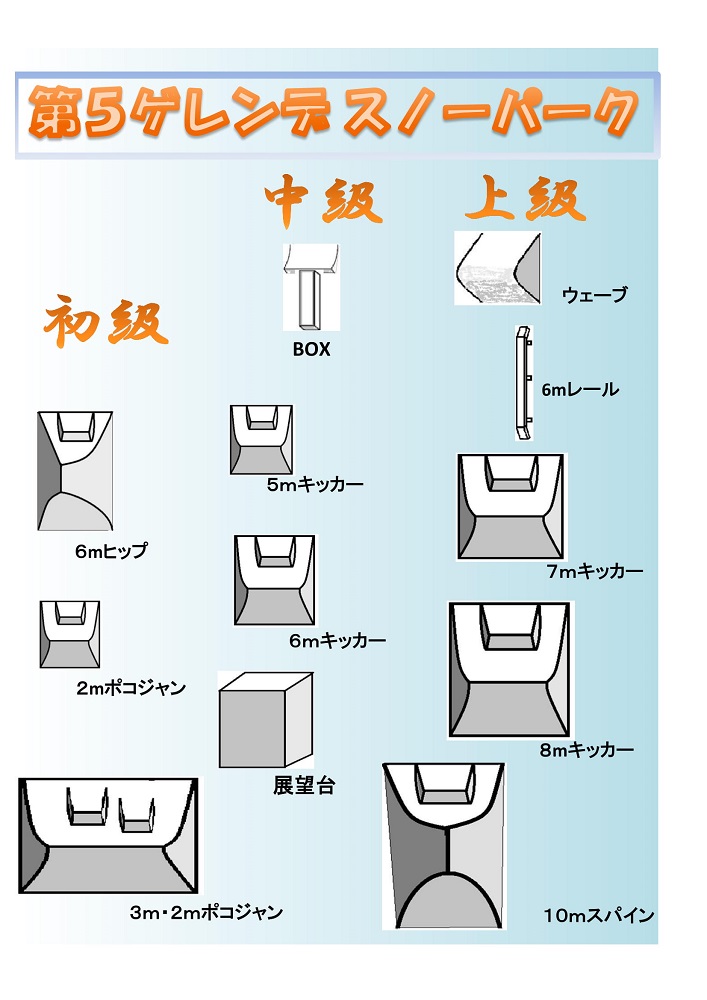
Yunomaru · 32 min
Tomi City. 1,700m base, nine courses, attached onsen, free 24-hour parking. Old-school Japanese ski-area energy with zero gaijin. The local mountain you fly to Japan to find and never quite manage. Finish the day with hot soba and a soak — and remember why you moved here in the first place. No English website by design.
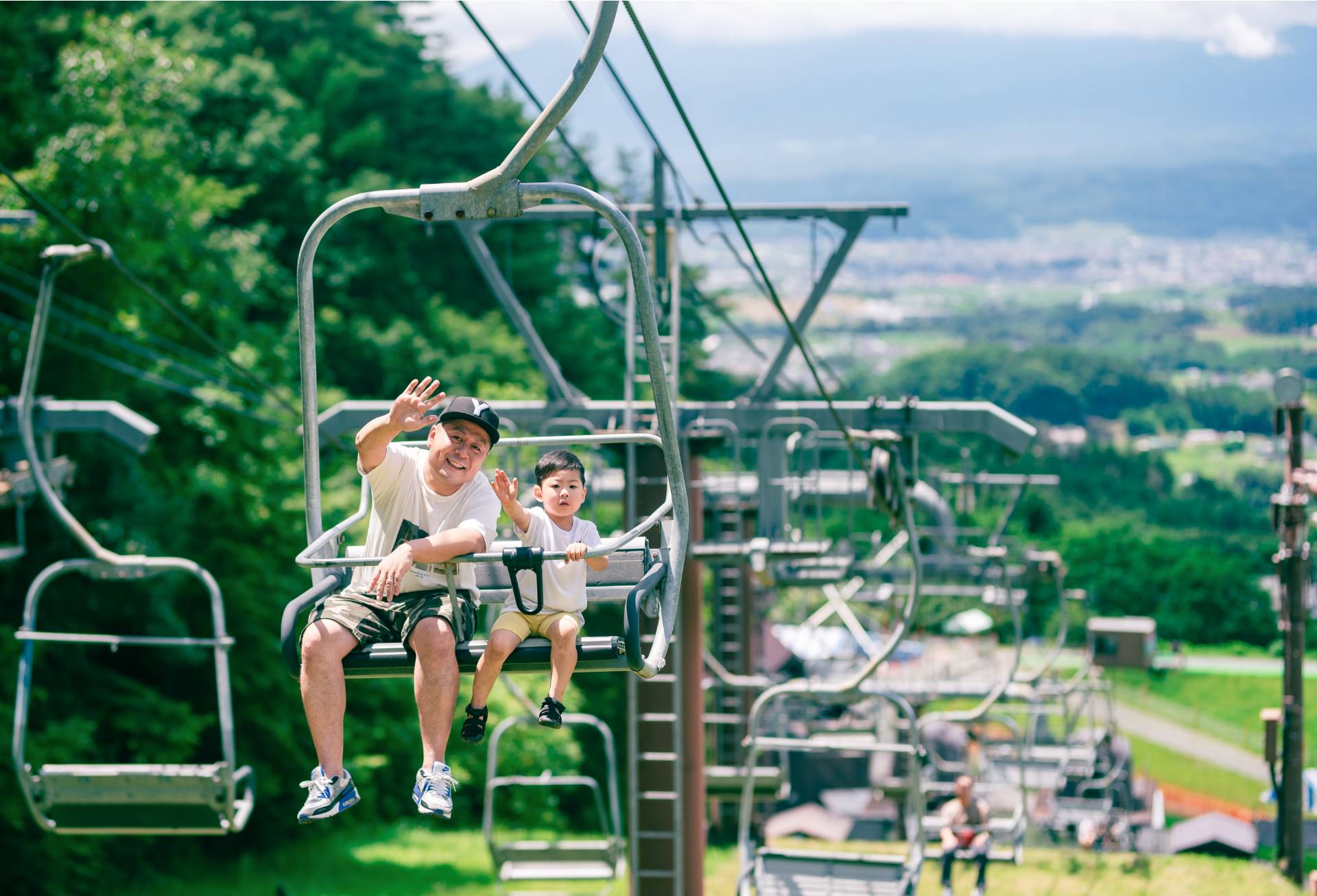
Saku Ski Garden Parada · 18 min
Closer than most Tokyo commutes. Two connected zones, eight lifts, on-site onsen. Gentle teaching slopes that guide rather than terrify. The resort we send first-timers, kids, and skeptical visiting parents to. Day one they're nervous. Day two they're hooked.
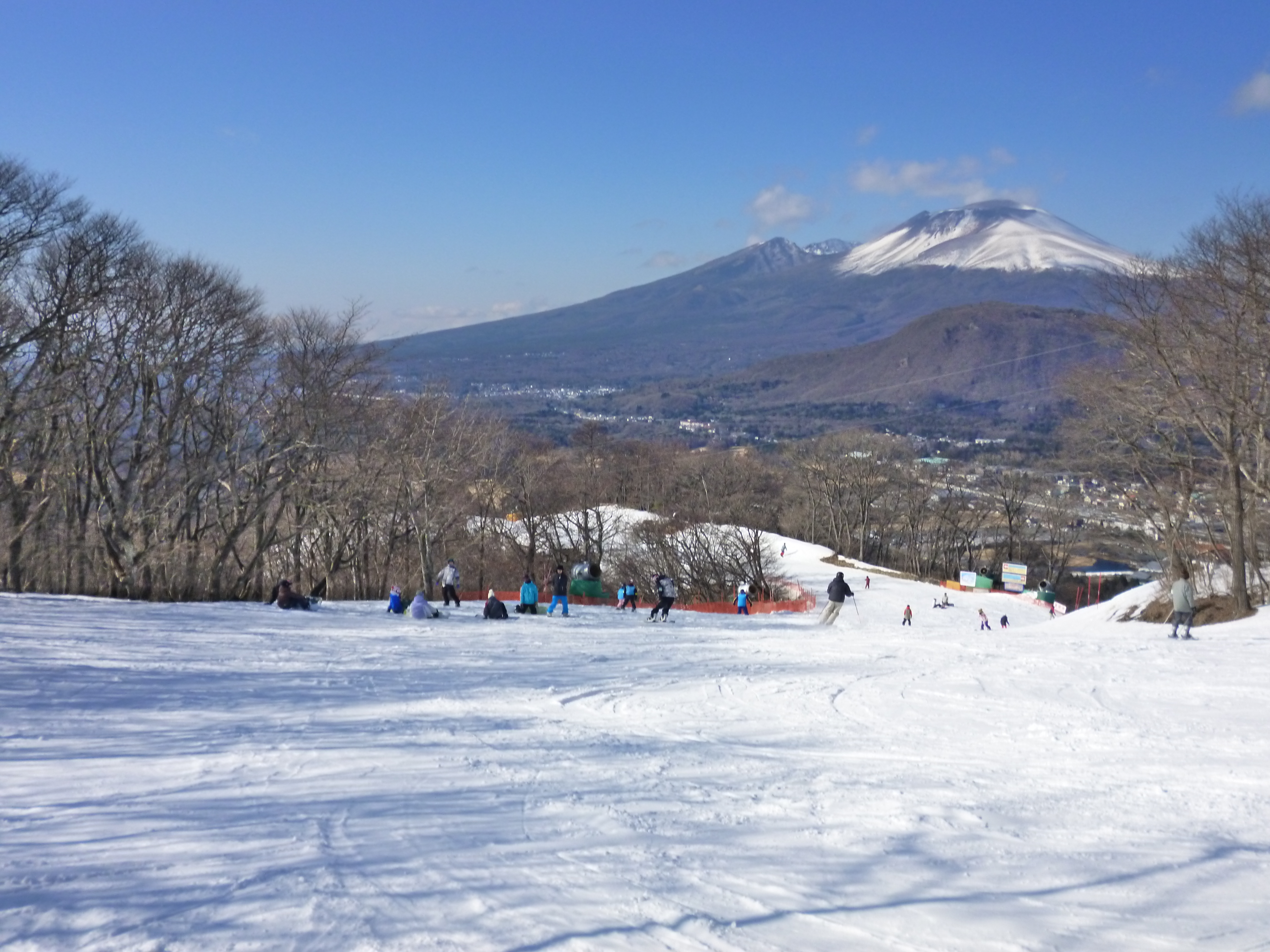
Karuizawa Prince Snow Resort · 35 min
Opens November 1st — first in all of Nagano, every year, no contest. Direct shinkansen from Tokyo (72 min). Night skiing until 9pm. ¥10,000 peak — premium outlier in this lineup — but the Mt. Asama panoramas and the fact you can ski Tuesday evenings from Tokyo justify it once.
You will be skiing on a volcano
Mt. Asama: 2,568m active stratovolcano on the Nagano-Gunma border — third-tallest active volcano in Honshu. Alert level 2 since 2023; ski terrain on the lower slopes operates normally. People pay extra to ski volcanoes in Iceland. We do it for ¥5,400.
About the snow
The Asama side of Nagano sits in the rain shadow of the Japan Alps — less total snowfall than the Sea-of-Japan side (Hakuba, Myoko, Nozawa) with higher base elevation so snow quality holds through the season. Come here for consistent conditions, blue-sky volcano views, and resorts that aren't stacked deep with foreigners. Want bottomless powder? Its also an hour away on Mt. Myoko.
Living with a volcano
You develop a relationship with it. Some mornings it's hidden in cloud, some evenings it glows. In winter the snow line creeps down its flanks like a slow tide. After a few months you can read its moods better than the weather forecast.
When you want a bigger mountain
Four mountains in the 50–90 minute range. Olympic courses, Japan's longest seasons, deep tree-skiing powder, family-friendly snow zones — all reachable as day trips. Half the price of Hakuba. Half the crowds. Twice the local character.
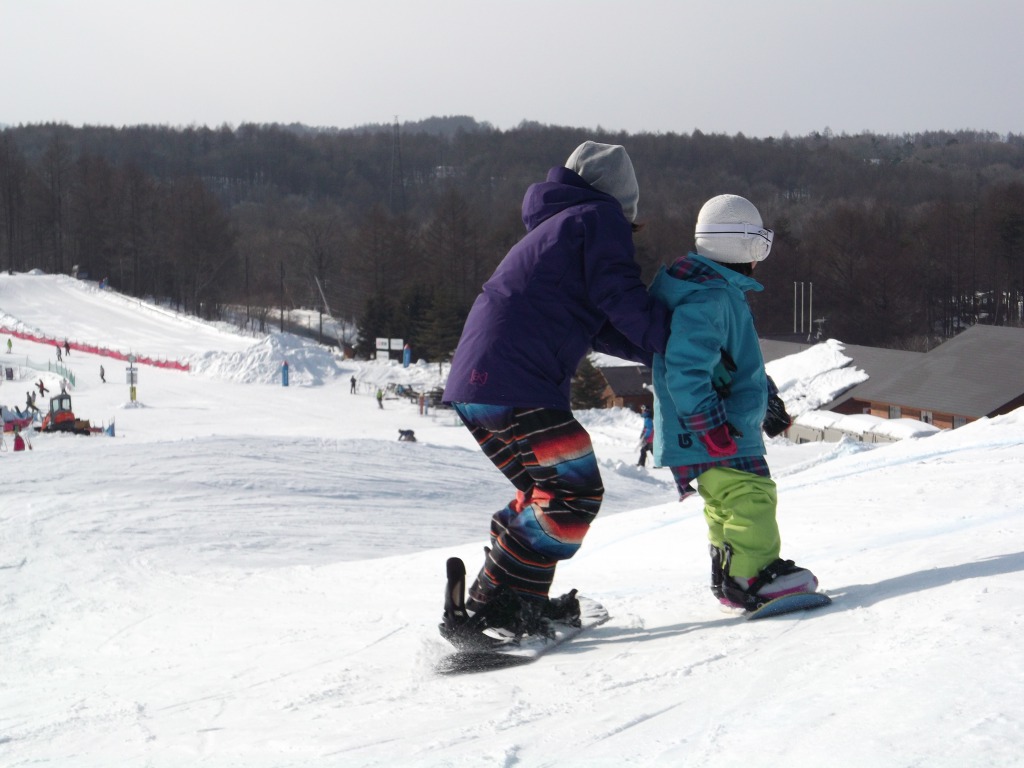
Karuizawa Snow Park · 52 min
Gunma-side family resort north of Mt. Asama. Dedicated kids' snow-play areas, short beginner pistes, hotel-attached infrastructure. Smaller and gentler than Karuizawa Prince — the resort for nervous first-timers and kids who just want to throw snow at each other.

Sugadaira Kogen · 55 min
1,300m+ plateau. Season runs December to mid-May — one of Japan's longest. Cold base air locks in consistent snow when lower resorts go slushy. ¥5,400 day pass. Late-April skiing while everyone else is doing hanami.
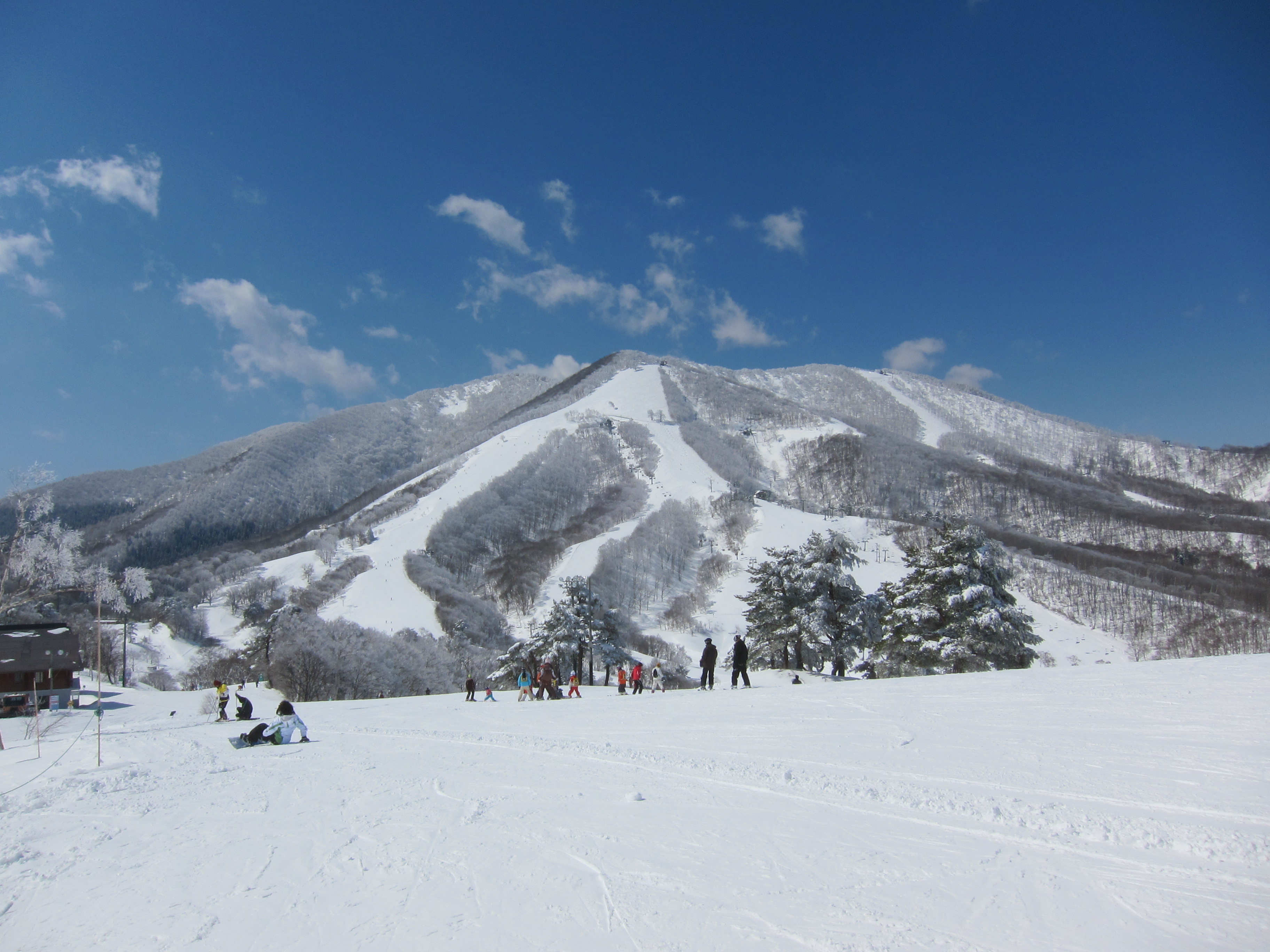
Madarao Kogen · 69 min
Open glades through old-growth forest fed by Sea-of-Japan moisture. The tree-skiing here is what people mean when they say Japow — untouched lines through powder between real trees. ¥6,500 advance day pass. Best after a recent dump.

Shiga Kogen · 88 min
Japan's largest ski area — 18 interconnected resorts on a single ¥8,000 pass. The 1998 Olympic GS and slalom courses are still marked and open to the public. English-speaking ski schools throughout. Ride three days straight without repeating a run.
The math is absurd
Skiing in Japan has a reputation for being expensive. That's a Hakuba/Niseko tourist-only reputation. Komoro is where the math actually works to skii everyday. A week of lift tickets, lodging, and food in Niseko costs more than a month based in Komoro. The Daily Access Pass ($80/day for housing + community + shared cars + boards) makes your stay trivial.
Lift tickets under $40
Asama 2000: ¥5,400 (~$36). Sugadaira: same. Yunomaru: ¥4,500. Saku Parada: ¥4,200. Karuizawa Prince at ¥10,000 is the local premium outlier — and Hakuba is ¥10,400 for the same money. A 30-day season pass to Asama 2000 costs less than four days of Hakuba lift tickets. Read that twice.
Buy gear, don't rent
Resort rentals run ¥4,000–6,000 per day. Above 6–8 ski days, owning pays for itself. Nagano has Hard Off, Off House, and 2nd Street locations stocked with secondhand boards, skis, boots, and outerwear from people who skied four times in 2008 and gave up. $30 snowboards, $21 skis exist — we've bought them. Realistic budget for a full used setup: ¥10,000–30,000 ($65–200). Sell it back in March, break even, walk away with a winter under your belt.
Come as a crew — group orders take up to 30% off, and the pass covers desks and breakfast between runs.
ZuCity Japan Daily Access
$21.00 USD / day
24 hours inside ZuCity Japan. $21 before community and referral discounts. A pass, not a membership. Walk in, work, eat, talk, sleep elsewhere. Come back tomorrow if the day earned it. The Grocery Store during work hours — fast wifi, quiet corners, the shared table where someone is always arguing about mechanism design. Weekly community dinner if the timing lines up. Open nights at Nakamandem when there is a concert or a takeover. Whatever workshops the residents are running that week — d/acc, DeSci, longevity, solarpunk agriculture. For Zuzalu alumni passing through Nagano. For popup-city travelers checking the signal before a longer stay. For digital-nomad-visa holders based in Tokyo who want a weekend around people building something. Friends of residents. Builders driving up from Karuizawa. Komoro is 90 minutes from Tokyo on the shinkansen. Three nearby stations make the math trivial. Mt. Asama on the horizon, castle ruins a walk away, onsens after work, soba for lunch. You can taste the whole thing in a day if you move well. No tour, no itinerary, no curated experience. Door code and a day. What happens inside is what happens for residents — which is the point. Public good, priced like one. The city funds its own open hours by letting the right strangers in. A popup city is a door that opens for the people who already know to knock.
- All Venue Spaces (Coworking, Music Lounge)
- Daily Breakfast
- Shared Cars
- Fast WiFi & Dedicated Work Stations
- Yoga & Zen Sessions
- DIY Regeneration & Workshops
- Biohacking & DeSci Experiments
- Parties & Local Adventures
- Expert Talks & Panels
- Mountain Views, Forest Air & Natural Onsens
Housing, cars, and workspaces are all covered when you stay at ZuCity
Myoko: Niigata's powder belt, 75 minutes away
The Joshinetsu Expressway gets you to the Nagano-Niigata border in 75 minutes — and onto the snowiest ski terrain in the country. 14 metres of annual snowfall. The locals' alternative to Hakuba; the powder hounds' alternative to Niseko. We treat it as a weekend trip, not a destination — bed at home, go for the snow.
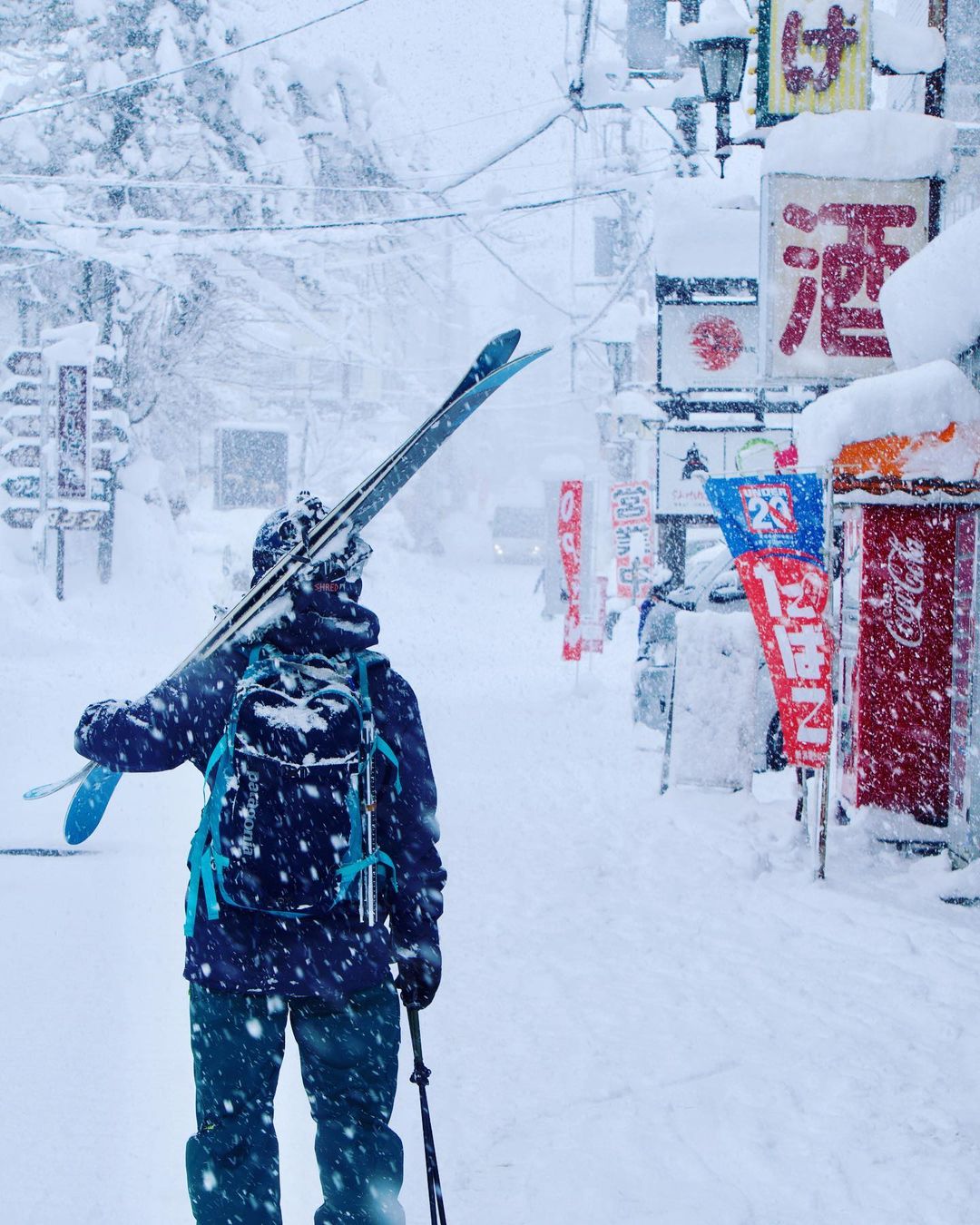
Akakura Onsen · 76 min
Three linked zones, night skiing until 9pm, 14 metres of annual snowfall — among the highest totals in Japan. Combined Myoko Akakura Snow Area pass connects to neighboring Akakura Kanko's terrain too. Onsen lodges throughout the village.
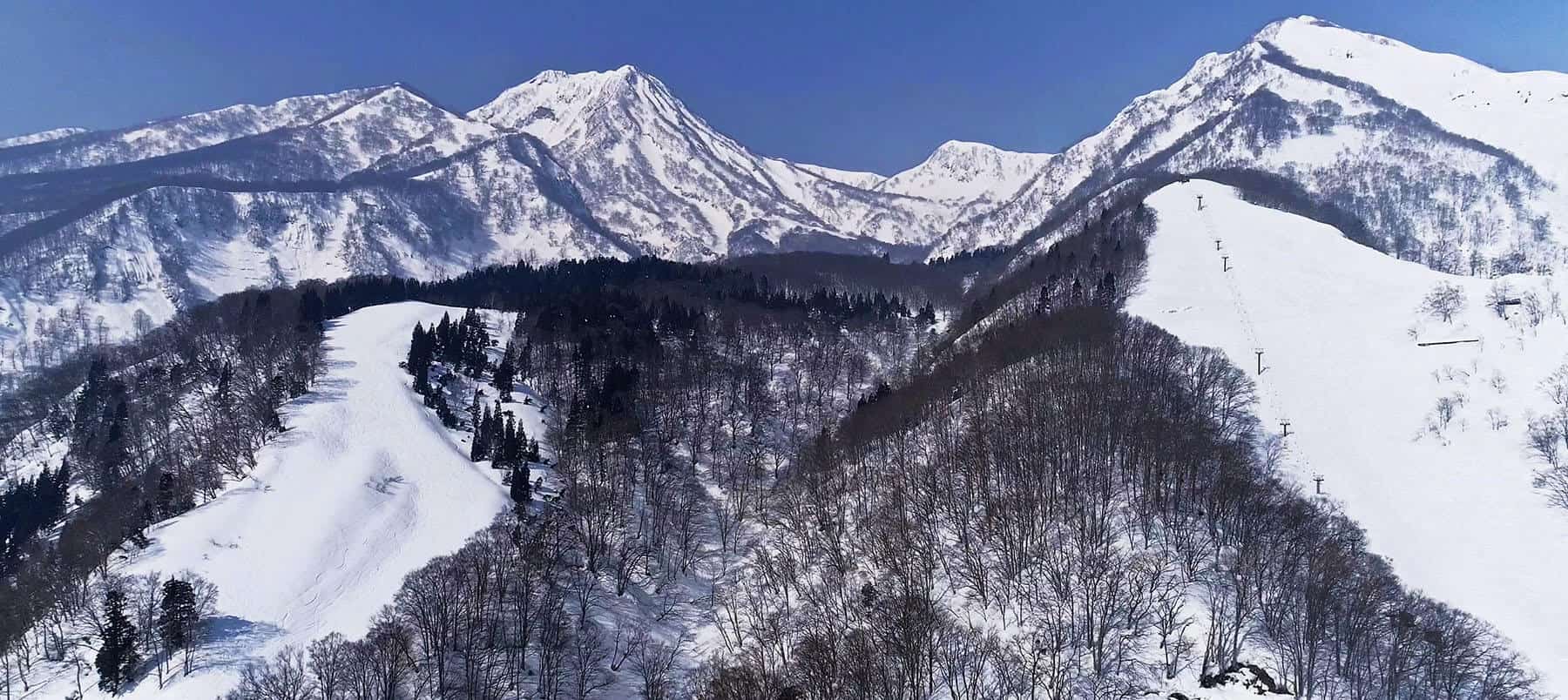
Seki Onsen · 89 min
Two lifts. That's it. Northernmost in the Myoko cluster, first to catch the Sea-of-Japan dumps, too small to have its reputation ruined by Instagram. ¥3,900 day pass. What people mean when they say 'deepest powder in Japan.' The insider tip we just put online. Sorry.
The famous ones
Two world-class mountains everybody's heard of, doable as long day trips. We mostly don't go — closer mountains are quieter, cheaper, and keep money where we live. But if you've never seen them, do them once.
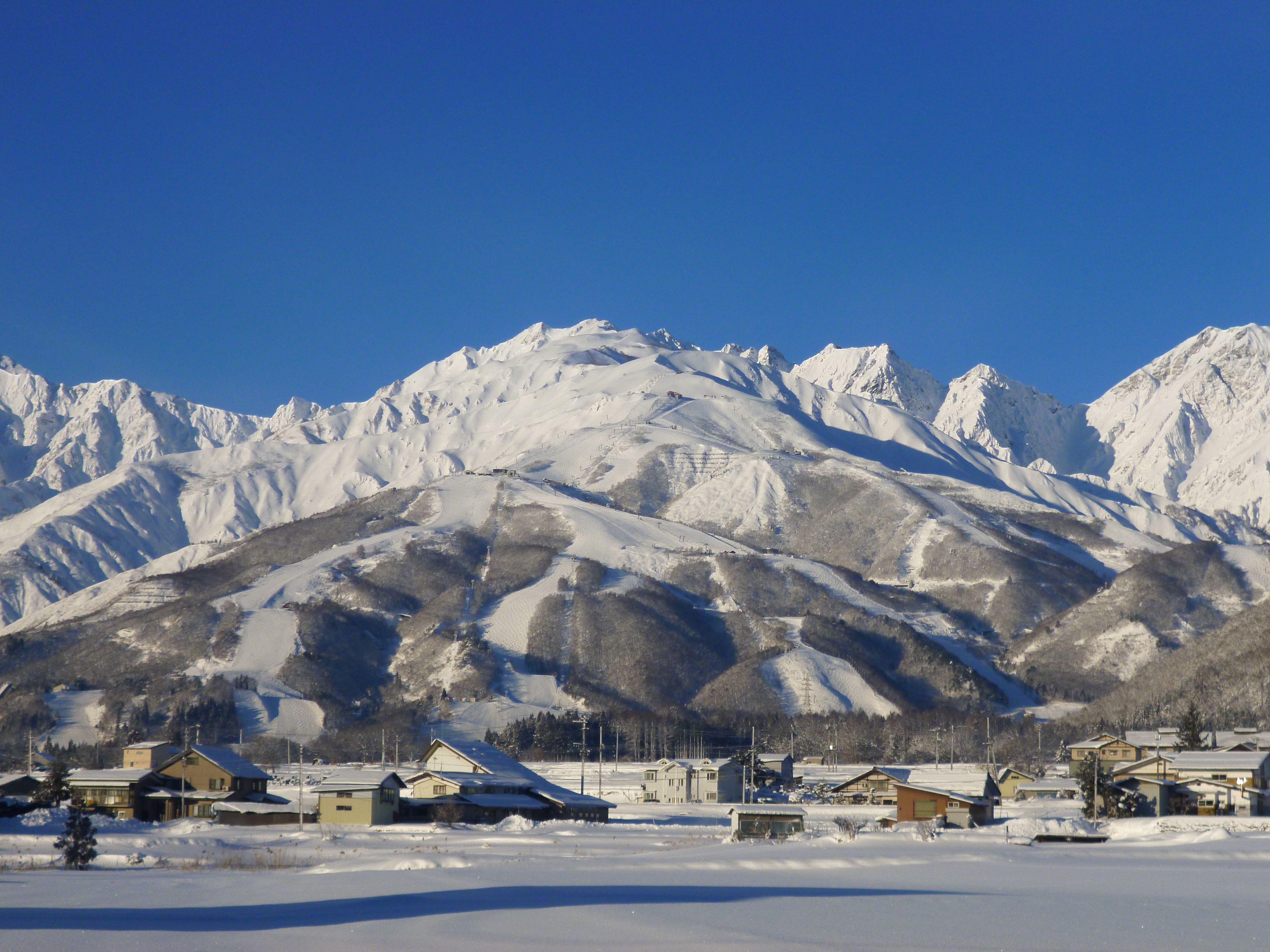
Hakuba Happo-One · 1h 51min
1998 Olympic alpine downhill venue. 1,071m vertical, the legendary Riesen Grat ridge, Hakuba Valley flagship. Full international infrastructure: English rental shops, multilingual ski schools, group packages, plenty of Australian accents. ¥10,400 day pass for the privilege.

Myoko Suginohara · 2h 11min
Longest single run in Japan — 8.5km, 1,124m vertical, 13 metres of annual snowfall. On the Ikon Pass. The Sea of Japan dumps everything it has on this mountain before reaching the Japan Alps. The resort Niseko people come to when they want to feel humble.
Twelve mountains closer to home are quieter, cheaper, and keep the money in towns we know — the family running the ramen shop near Asama 2000, the obasan who's been pouring coffee at Yunomaru since the eighties. Do them once and come home. Just don't make it a habit.
1998 Olympic infrastructure, still standing
Nagano hosted the 1998 Winter Olympics. Enough of the infrastructure is still operating that you can ski Olympic-grade terrain on a normal Saturday for ¥8,000. World-class courses, no Olympic price tag — Nagano subsidized construction; we get to enjoy what they built.
Olympic alpine (Shiga Kogen)
The men's and women's GS and slalom courses are still marked at Shiga Kogen and open to the public. ¥8,000 day pass. 88 min from Komoro. Carve the same line they carved on TV in 1998.
Hakuba Happo-One
Downhill, super-G, and combined events. The Olympic downhill course is now a recreational expert run — point your skis straight, hold on, try not to think about how fast Picabo Street was going.
Hakuba Ski Jumping Stadium
Open year-round. Public observation deck on the 4th floor of the tower. Lift between Normal and Large hills if you want to see the geometry up close. Worth a stop on the way back from skiing.
M-Wave (Nagano City)
Olympic speed-skating oval, still hosting public skating sessions October to March. Houses the Nagano Olympic Museum. About an hour from Komoro. Bring a date — it's romantic in a 1998 sort of way.
Mountains around Komoro
Komoro & Surroundings
Exploring the natural beauty around Komoro — mountains, temples, local festivals, and the landscapes that make this region of Nagano so special.